Thoughts on development, technology trends, best practices, and lessons learned from building modern web applications.

Rails has a long history of providing expressive, intuitive query methods. You’re probably familiar with `find_by` and `find_by!`, which let you grab records by certain attributes....
Rails enums are a powerful way to map symbolic values to integers in your database, offering readability in code and performance at scale. In this post, we’ll explore what enums ar...
In web applications, efficiently managing database queries is crucial for maintaining fast response times and a smooth user experience. With its robust conventions and built-in too...
In the Rails ecosystem, view resolution plays a significant role in how the framework identifies and renders templates. In larger applications, especially those involving plugins o...
Capybara is a popular testing tool for writing and executing acceptance tests for web applications. It's often used in conjunction with RSpec, a testing framework for Ruby, to writ...
Git is a powerful tool for managing code projects. It allows developers to collaborate on code changes, revert changes, and track progress over time. However, for beginners, Git ca...
Routes in Rails determine how URLs are mapped to specific controller actions. When a user sends a request to your application, the routing system will parse the URL and match it to...
The `skip_before` method in RSpec is a useful tool for selectively skipping certain before blocks in your test suite. These before blocks are run before each example in a test suit...
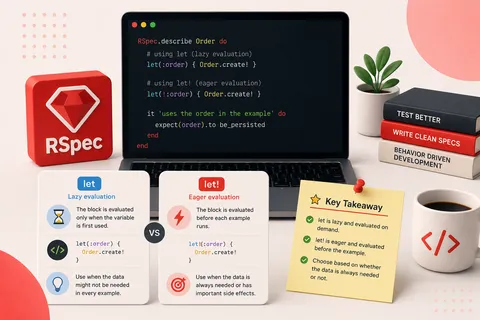
In the Ruby testing framework RSpec, the `let` and `let!` methods are used to define a variable or method that can be used within an example or group of examples. Both let and `let...
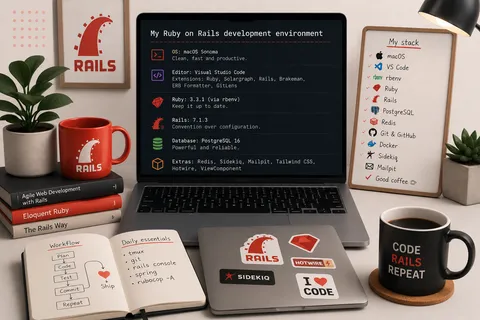
There are plenty of options now to create your personal development environment, this is the one that works for me. I've been using it for a couple of years now and I'm really happ...
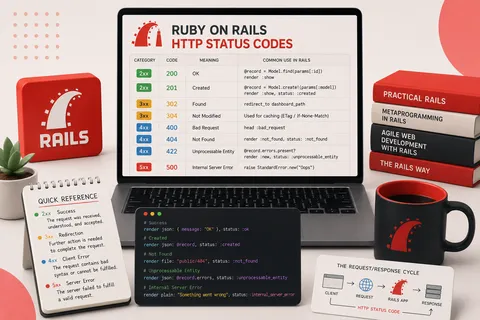
When working on a rails application (or specially on an api) it's not uncommon to have to handle different http status codes.
For a long time, I used to have my website running Github pages, being created by jekyll. And it was working fine. The only drawback was that I wanted to start a blog and in order ...